
Let’s Hear it for the Boys!
Two New CASA Volunteers Talk about the Importance of Male Role Models
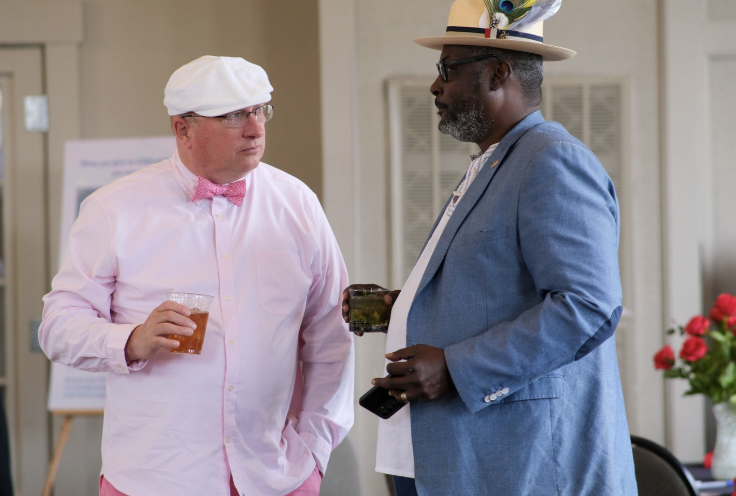
As many of you know, CASA is a national network. Across the country, roughly 79,000 CASA Advocates speak up for children who’ve experienced abuse and neglect. And nearly 82 percent of these volunteers are female. Simply put: we don’t have enough male CASA Advocates.
Why does that matter? Our advocates are a child’s voice in the courtroom. They review children’s case files and make placement recommendations to judges. But they’re also trusted adults. If you aren’t living with your parents because they’ve abused or neglected you, who do you ask for advice? For many of the young people we work with, the answer is a CASA Advocate.
Our volunteers help young people navigate college admissions, fights with friends, and the many questions that accompany growing up:
How do I tie a tie? How do I shave? How do I stop feeling so angry? What does it mean to be a good man?
It’s important to have male role models who can answer these questions, and that’s why we’re proud that our newest cohort of volunteers includes two men.
Keith Bratt decided to volunteer with us because of his wife, Patsieann Misiti, who has been a CASA Advocate for the past year and recently won our Champion for Children Award.
“She’s very passionate about it, and I’ve seen all the good things she’s doing to help young people in our community,” Keith said. “Whenever she talks about the program and the person she works with, you can tell she's very engaged. She’s enthusiastic to do whatever she can to support him.”
Keith spent roughly 34 years working for the federal government. He retired about a decade ago, left Washington, D.C., and moved to West Virginia because Patsieann grew up here. Outside of volunteering, he’s active in a book club, golfs, plays pickleball, and spends plenty of time taking care of his dog.
Even though he hasn’t been paired with a child yet, Keith is already certain that CASA makes a difference.
“One of the new CASA Advocates that just joined my cohort, she was volunteering with a different program earlier in life. And she said she still keeps in contact with many of the children,” Keith said.
Our other male volunteer has known about CASA of New River since before the organization even formally existed. Hal Dumas is the husband of our founder and executive director, Dr. Kristi Dumas.
“I saw her build this program from the ground up, and I saw her heart and her passion for those that were neglected and did not have a voice of their own,” Hal said.
“I decided to jump in and roll my sleeves up to a worthy cause that I felt passionately about. Like the old people say, ‘Many hands make light work.’” Hal also spoke about the importance of children who’ve experienced abuse and neglect having strong male role models.
“We’ll have to figure out how to engage other men to want to be a CASA Advocate and make it cool to be an advocate as a male,” Hal said. “Helping boys in foster care can be tough because they're older and they've been through so much abuse and neglect that sometimes people want to shy away from that. We have to convince them that they are needed and wanted and that this is an admirable thing to do.”
Hal previously served in the military, and he’s retired from a job in the federal government. He currently owns and operates a private security firm, located on the West Coast. Being self-employed gives him a flexible schedule that allows him to volunteer and support important causes that he cares about, like CASA of New River.
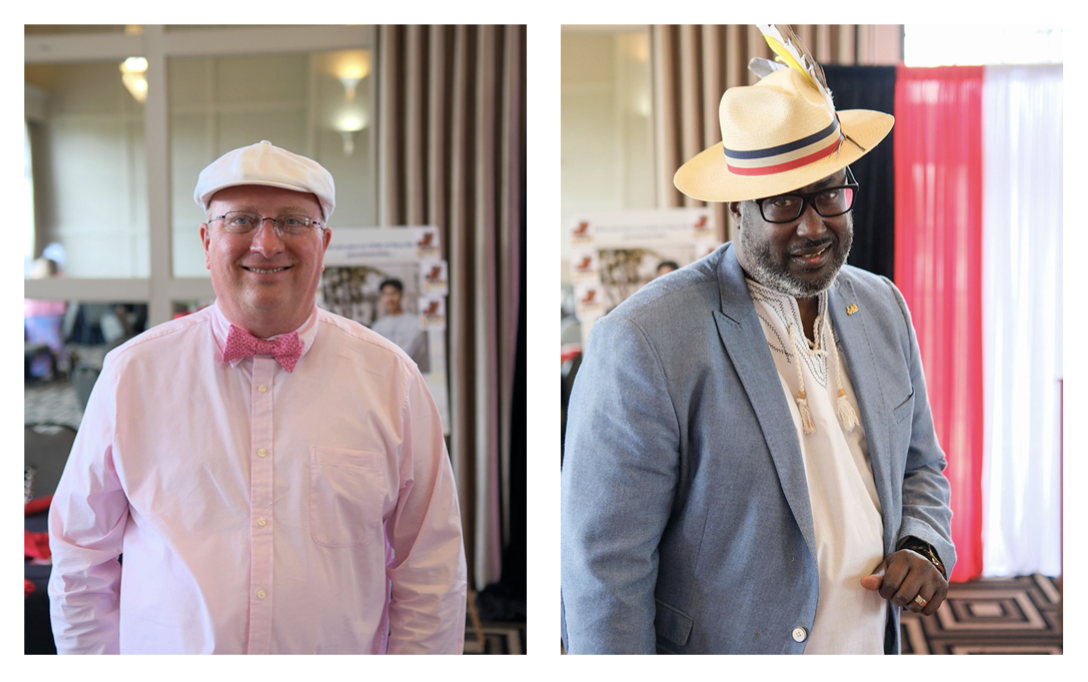
Hal and Keith both attended our recent Bet on a Child’s Future event, a Kentucky Derby-themed fundraiser. Every lady wore their Derby Best, including some of the biggest, boldest hats we’ve seen in a while. We enjoyed some delicious hors d'oeuvres, a few mint juleps,and live music by West Virginia’s first lady of soul, Lady D.
“Oh my God! The regalia, the pageantry of it all. It was pretty amazing. There was a huge, huge, huge support system that came out for this event,” Hal said. “And most importantly, the children were made human instead of a number, because sometimes people just see statistics and see numbers and don't really attach them to the feelings of humanity.”